Cornwall County Council Clerk and Chief Executives Cricket Club
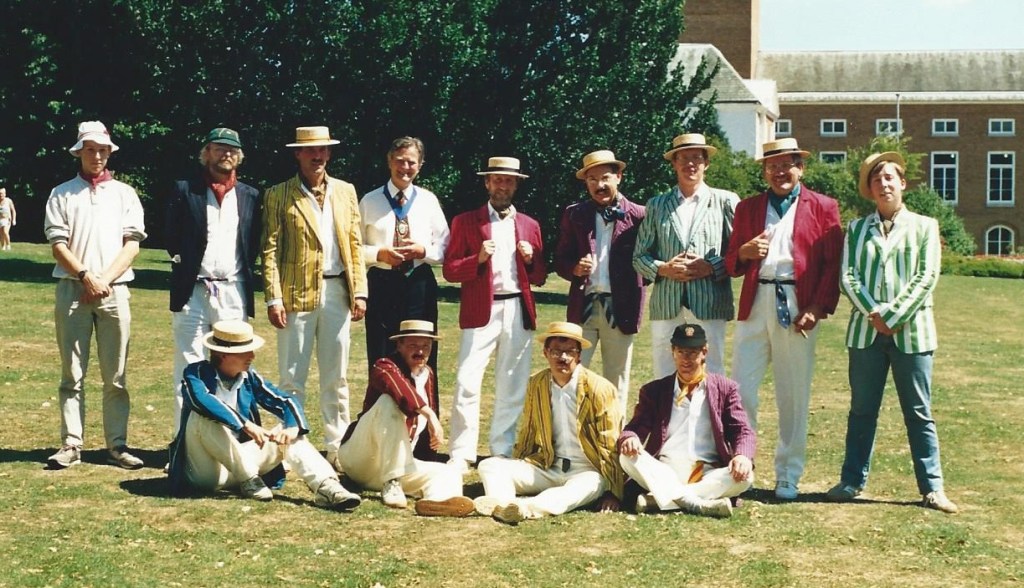
The 7Cs started when Cornwall County Council had cricket matches between each department and were the only departmental team to continue when the interest in these games declined. They started playing against other office based teams in Truro and beyond such as Midland Bank, The Inland Revenue, Lilly Lewarne Architects and an annual fixture against the Chairman of the County Councils XI consisting of County Councillors. The fixture against the Chairman’s XI is the only one remaining today as nearly all the regular players have retired from work and cricket.
As the Clerks Department was struggling to raise 11 players itself the qualification was extended to people that had worked in local government and anyone else that had connections to those bodies. I qualified through my father being a clerk at the council as he described his post. I also worked there in the holidays when a student as a computer operator and later did an 18 month contract there in Social Services to further qualify.
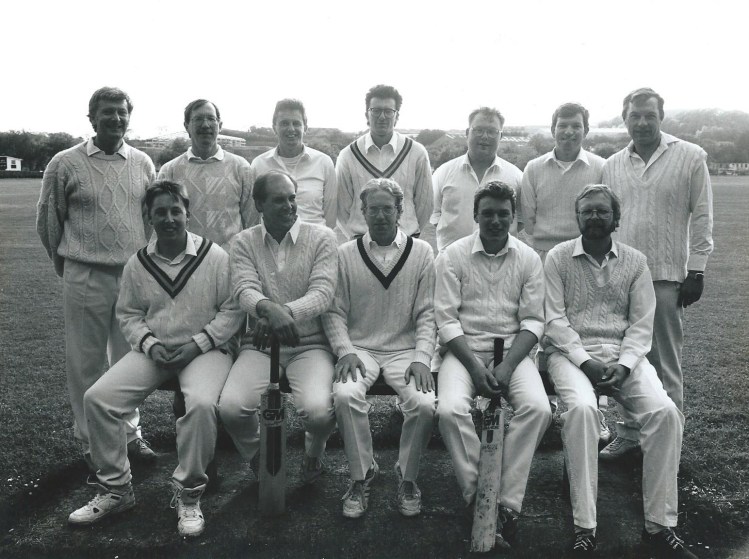
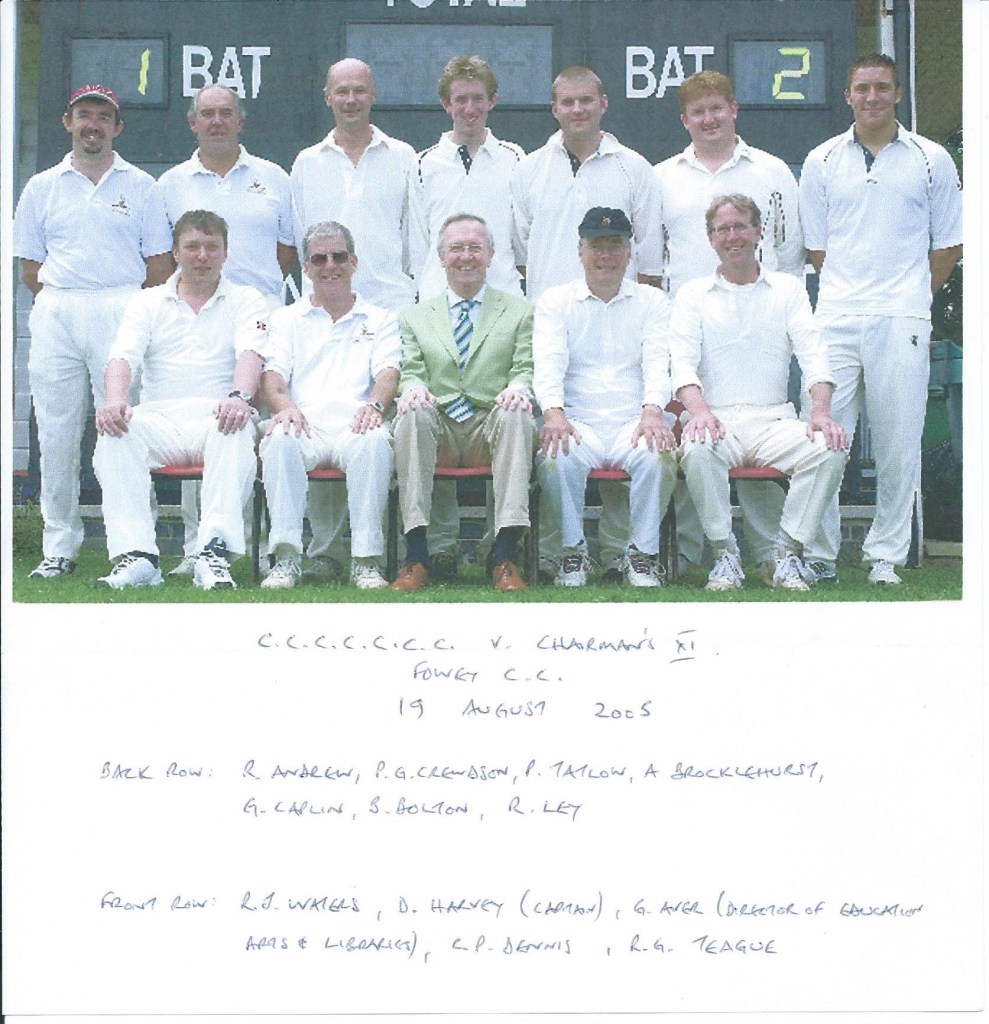
C.C.C.C.C.C.C. v Truro Post Office 1991 at Boscawen Park
Back Row, left to right: Richard Lester, Bob Carlin, Graham Davey, Neil Jackson, Jolyon Coombe (RIP), Mike Lander (guest player), Steve Nicholson
Front Row, left to right: Jeremy Rapsey, Phil Crewdson, Bob Teague, Rob Waters, Nigel Vaughan.
It was a welcome departure from the league cricket I was playing at the time in the top tier of Cornish league cricket for Redruth CC in the Senior One West Division about two or three levels above my abilities. At the week-end I was a genuine No 11 that rarely bowled and having to face several professional West Indian quicks that were playing in the Cornish league at the time such as Eldine Baptiste at St Gluvias and John Brown at St Just (more about that in the Redruth CC section). For the 7Cs however I was considered a top order batsman and also got to bowl in every game as we had a 3 over maximum or even 2 in our twenty over games.
Cricket is one of the few games where people of vastly differing abilities can play in the same game. On a Saturday you could be hearing the ball fizz past you on without actually seeing or making contact with it. On a Wednesday evening you could be facing someone filling in for the Inland Revenue who could scarcely get the ball down to the other end in their allotted 2 overs. Both types of bowling were equally difficult to lay a bat on one producing deliveries far too good to get anywhere near and the other having you either trying to hit it on the 4th bounce or swat it from a yard above your head.
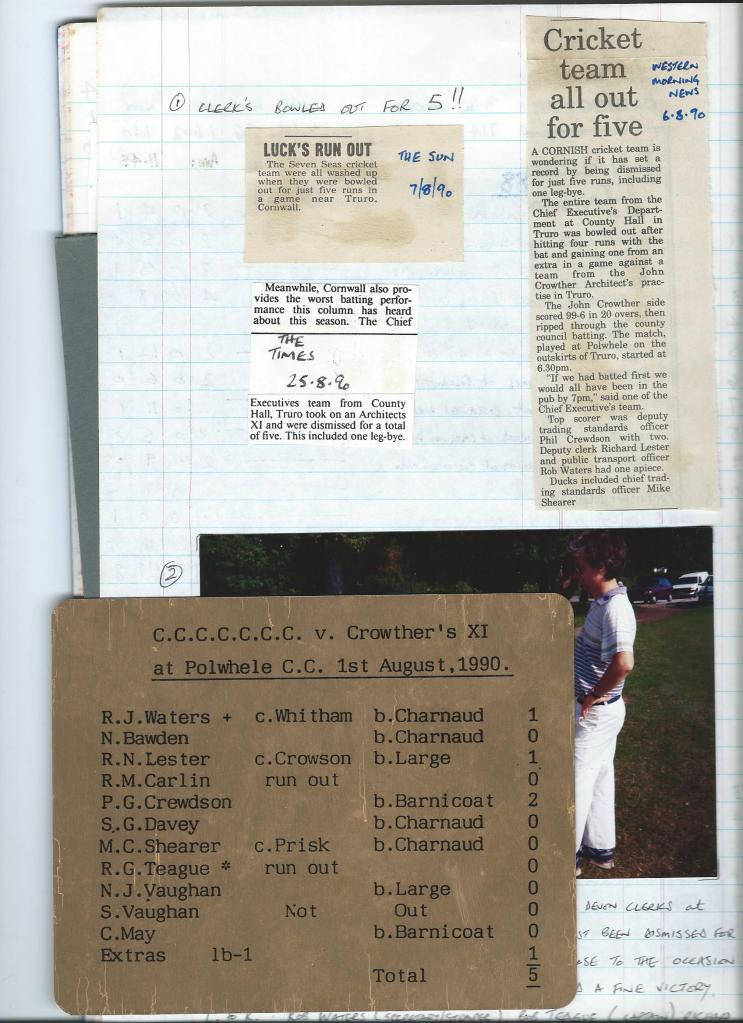
Not all bowlers in the 7Cs form of cricket were in the mould of the ones pressed into service by the Inland Revenue though and their were some very good cricketers that turned out for their ‘office’ teams on occasions. The less scrupulous would engage ringers to boost their chances of success. Crowthers Architects brought in a player that had played at the top level of Cornish cricket a certain Peter Barnicoat who was definitely not an architect. He was however involved although not the main architect of one of 7Cs most famous defeats where they were dismissed for 5 which made the national press in The Times and The Sun. It did produce an early adjournment to the City Inn afterwards which was never a bad thing and stories of that day at Polwhele CC still persist to this day.
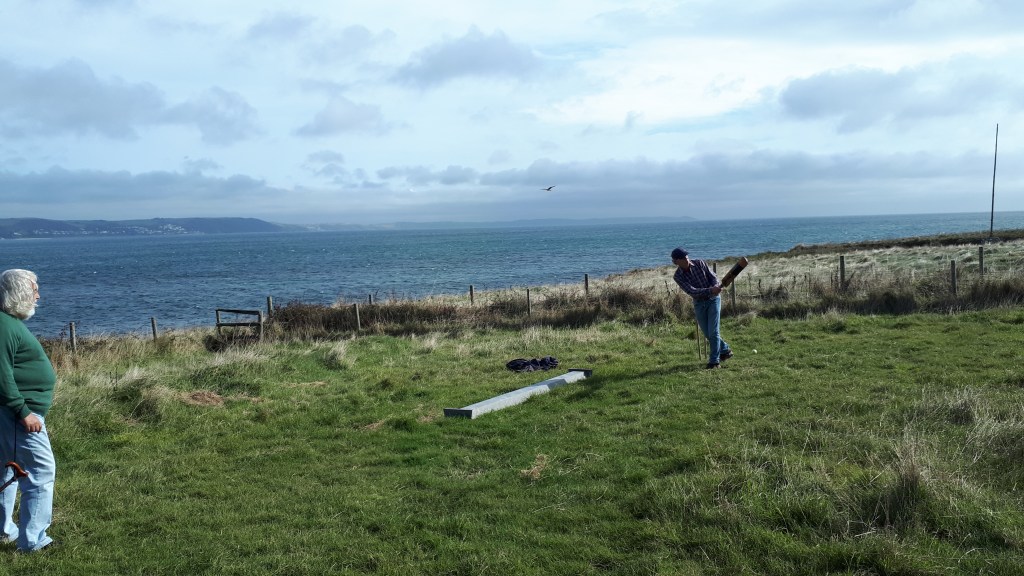
We now meet up regularly to continue the social side taking in some local transport, Cornish industrial history and some culture with a modicum of exercise under the name of SCEPTICs (Seven Cs Ex Players Transport, Industrial and Cultural Society) which is the brain child of R. G. Teague a long time stalwart member of the 7Cs and the County Council.
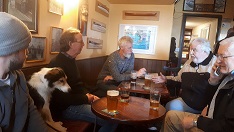
The 7Cs would have a regular fixture v Devon County Council playing mostly away on with only one home fixture over the years. The accommodation for the away fixture was in the police training college at Middlemoor in Exeter. On the Friday night after an early departure from work there was an evening game v Devon & Cornwall Police who luckily had many officers on duty so weren’t too strong for the 7Cs. The main fixture of the week-end tour took place in the grounds of Devon County Council in Topsham Road where the Council had a social club and a grassy area big enough for a cricket field. In true touring tradition the off field activities could have a detrimental effect on the on field performances and Exeter had a number of good hostelries that demanded a visit even on the day of the big match. Jolyon Coombe, sadly no longer with us, came along on these tours mainly for the off field activity particularly when it involved seeking out his favorite tipple of scrumpy cider. He would don the whites if required but only if we were short preferring to take on the role of entertainments officer on such trips. On the morning of the match against Devon he wanted to seek out a particular cider house in the vicinity of St Davids railway station called the Red Cow. Bob Teague agreed to accompany him there as he knew where it was. The Red Cow was legendary amongst railway enthusiasts such as Bob, partly due to its proximity to both Red Cow Level Crossing, at the London end of St Davids station, and the station itself. It was once possible to leave the station platform via the level crossing and go to the pub! In the 70s, 80s and early 90s, diesel loco enthusiasts would head to the pub for either the cider or, more often than not, what was widely regarded as the finest pint of Eldridge Pope Royal Oak ale in Devon, straight from the barrel.
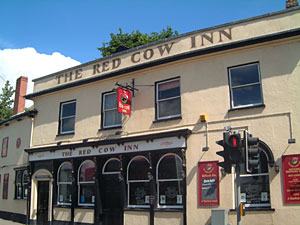
Bob and Jolyon made their way to the Red Cow in time for the morning opening of 11am to sample their eclectic range of ciders even though Bob was and still is a real ale enthusiast and fellow founder member of CAMRA Kernow. Bob’s capacity for strong cider was not as great as Jolyon’s and even though he ‘just had a couple’ scrumpy does have a negative effect on one’s general ability to function normally and perform everyday tasks such as walking. The match was about to start as the two wandered in having somehow managed to negotiate their way back to the ground. It was decided that they could open the innings togther as a penance for late arrival and it wouldn’t last long and they could then have a lie down in preparation for bowling after the tea interval. By his own admission Bob wasn’t the greatest batsman in the world with a career average for 7Cs of 8.40 and also had a unique record amongst most pub, office, village and even club cricketers in that he had once managed to bag a pair in a match. The William IV pub cricket team had a rare fixture against R S K Salisbury’s XI at Truro School and replying to the rather better cricketer’s first innings the William team could only muster a small total and as the pub wasn’t yet open were invited to follow on. Bob managed what must have been one of the quickest pairs in history that day as The William didn’t fare any better in their second dig going down to an innings defeat.
Meanwhile back in Exeter Bob was preparing to open the batting for the 7Cs with a far from ideal preparation for the challenge that lay ahead. Having rarely achieved double figures in previous knocks when in full command of his faculties Bob proceeded to club the ball to all parts of the County Council recreation area that doubled as a cricket ground. Jolyon departed quickly before Bob suddenly started making contact with the deliveries being sent in his direction. He got to 10 and then 20 in quick time and before anyone could realise was approaching a maiden fifty. On 48 he was informed of his proximity to a maiden 50 and went into his shell rather than continuing in the same vein that had got there in the first place. Inevitably this lead to his demise attempting to play ‘properly’ and he was a dejected figure wandering from the playing arena. Rather than be delighted at such a big score he was devastated at just missing out on a maiden fifty as opportunities like that only come around once in a lifetime as indeed was the case with Bob who was only to reach 30* v Truro Police as his next best career score. If you are essentially or entirely a bowler when you do actually score runs with the bat it always seems a much greater achievement. You have to do it all on your own with no help from fielders and one mistake and it’s all over or in my case your captain declares when you are on 48* having never got a 50 in club cricket. My first and only 50 playing league cricket at a decent standard was in Division Four West and came for Botallack against Barripper who had one of the fastest bowlers in the league at the time one of the Trestrail family that populated the Barripper team at the time. Needless to say my scoring wheel that day would have been mostly in an area between backward point and the wicket keeper through which the ball flew crashing into the granite hedge that formed the boundary on that small Bottallack ground. My first 50 of any description was playing for Braywood on tour at Redruth a few years before that, more on that story later as they say.
 Fifty Five Years of Cricket Memories